#5 Technology reduces the distance between people, but that doesn’t mean it creates closeness.
I went to Gothenburg today with my almost-two-year-old to attend a memorial service for my husband at Chalmers. We took the train and watched the landscape glide by.

I went to Gothenburg today with my almost-two-year-old to attend a memorial service for my husband at Chalmers. We took the train and watched the landscape glide by. We explored the all-too-exciting Drottningtorget. We took the tram, which was so fascinating that he fell asleep far too early and still refused to let me lower the stroller.
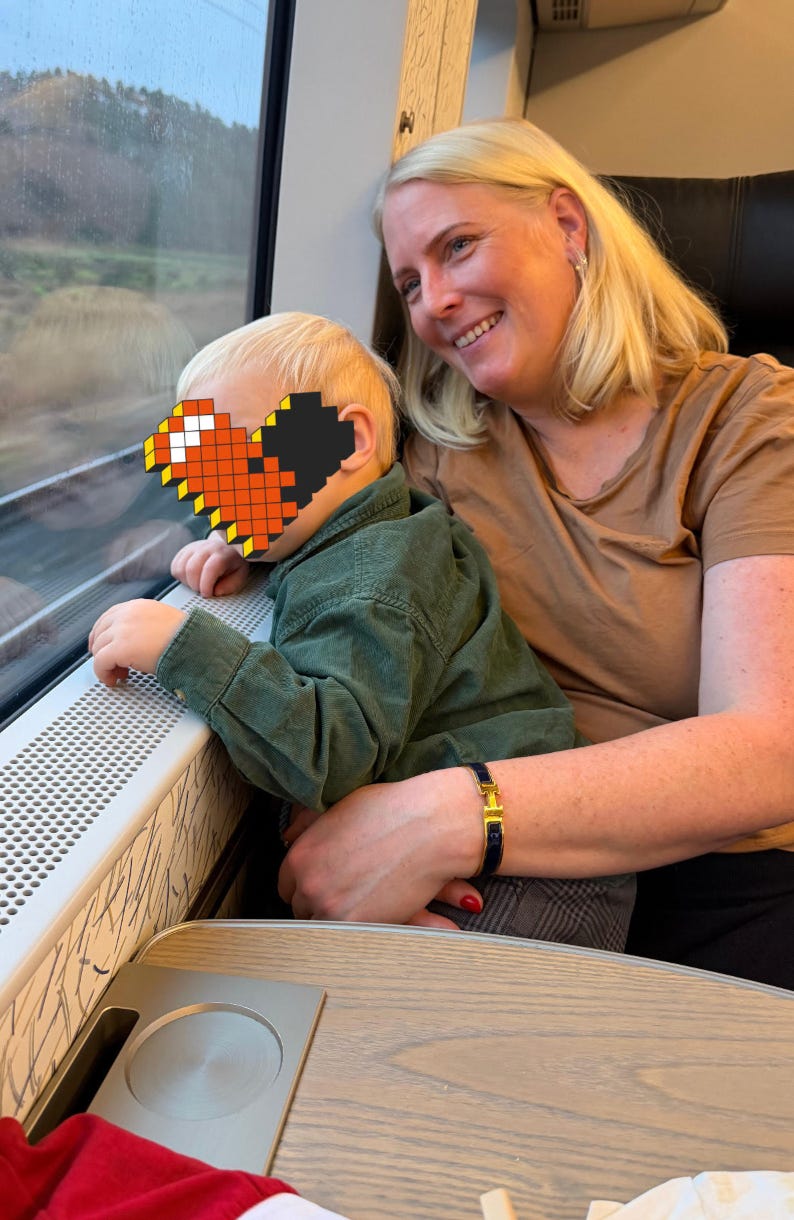
Göthe Wallin took the photo.
Jonathan Safran Foer writes in How Not to Be Alone that “the closer the world gets to our fingertips, the further it gets from our hearts.” I think he is right. Technology reduces the distance between people, but that doesn’t mean it creates closeness.
In our all-encompassing digital world, I’ve noticed how quickly we reach for the physical when life becomes heavy. Over the past weeks, after my husband’s passing, people haven’t just sent messages. They’ve sent handwritten letters on actual stationery. They’ve brought flowers to the grave. Some have insisted on sending money the traditional way, through a bankgiro.
I like it. I think we need it. I do these physical things myself to stay alive. To keep Martin alive. As an example a couple of weeks ago, I went for coffee at Martin’s favourite café with two of his colleagues. We talked the kind of talking you can only do when you sit at the same table, with the same cup in your hands, in the same room where he once sat. There is a steadiness in that. A physical truthfulness.
There is something in us that resists the idea that the most important moments of our lives can be handled through a screen.
So we reclaim the physical: the paper, the flowers, the rituals, the weight of things. Not because we reject the digital, but because presence - real presence - has a texture that technology can’t imitate.
And in grief, that texture matters.