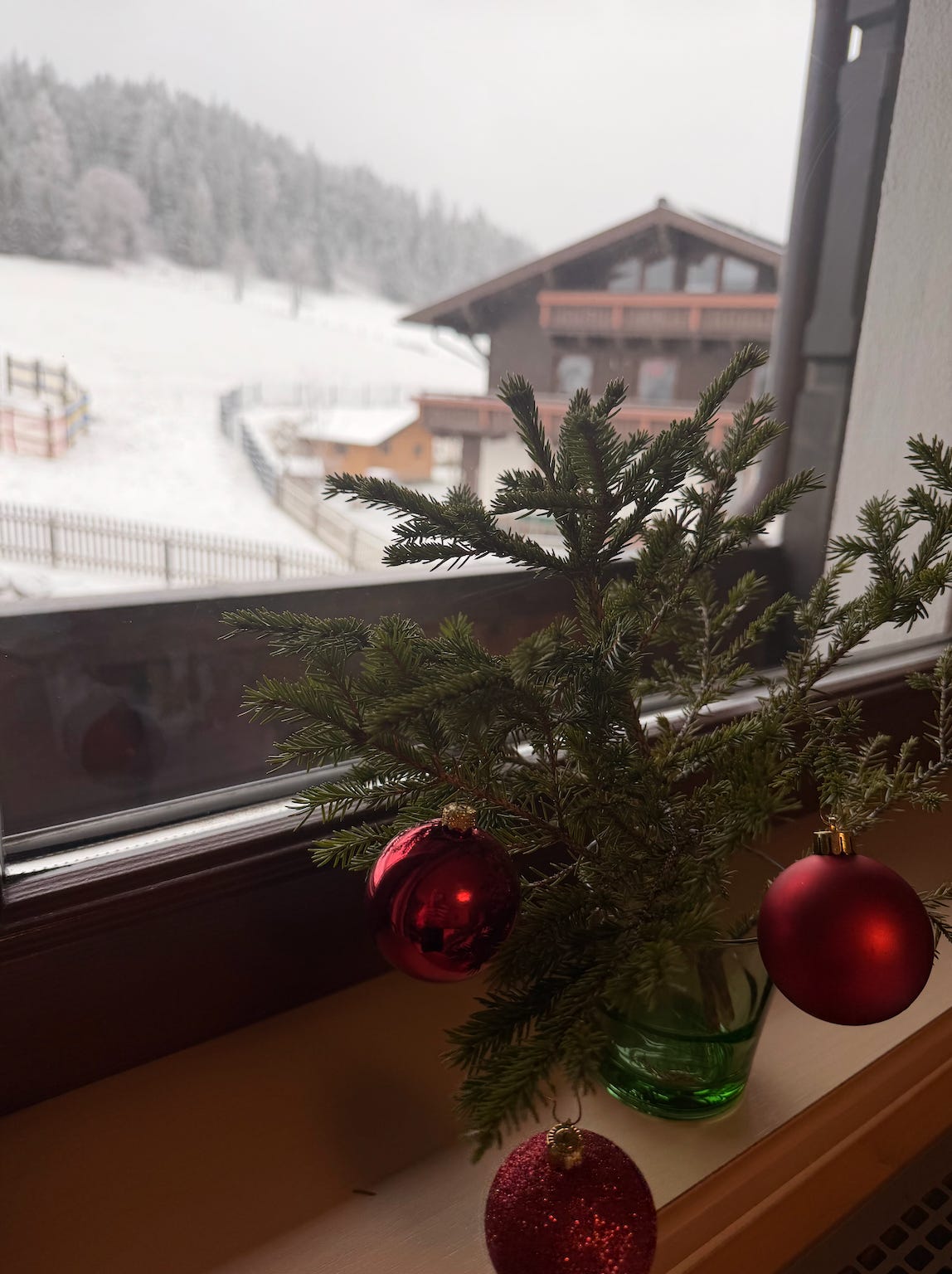
#24 Becoming more human
The one thing Christmas keeps teaching me, especially in a time of technological change, is how to become more human.

I asked ChatGPT to write a Christmas carol based on my Advent calendar. It didn’t turn out well. Then I asked ChatGPT to write a Christmas carol in general. That didn’t turn out well either.
And that is the final point of 24 things we need to know about technological change.
As technology becomes smarter, faster, and more efficient, it still cannot copy human pain, human loss, or human endurance. Large language models have never lost a loved one. They have never been oppressed, never been persecuted, never had to endure a life where dignity was denied or safety withdrawn. They have no memory of grief, no bodily fear, no quiet despair.
Most Christmas carols were not written from optimisation or competence. They were written from hunger, exile, loss, cold, and longing. From the deepest layers of human experience. From places technology cannot access, because they are not informational. They are existential.
Christmas reminds me that becoming more human means holding all of it. Grief and despair. Love and connection.
In a technological society, this may be the only responsibility we truly have:
to return to, and remain, human.
I end where many have ended before me:
In the bleak mid-winter
Frosty wind made moan,
Earth stood hard as iron,
Water like a stone;
Snow had fallen, snow on snow,
Snow on snow,
In the bleak mid-winter
Long ago.
What can I give him,
Poor as I am?
If I were a shepherd
I would bring a lamb,
If I were a wise man
I would do my part,
Yet what I can I give him,
Give my heart.
(Christina Rossetti, 1872).
Merry Christmas, everyone.